
Tree Removal Blue Mountains
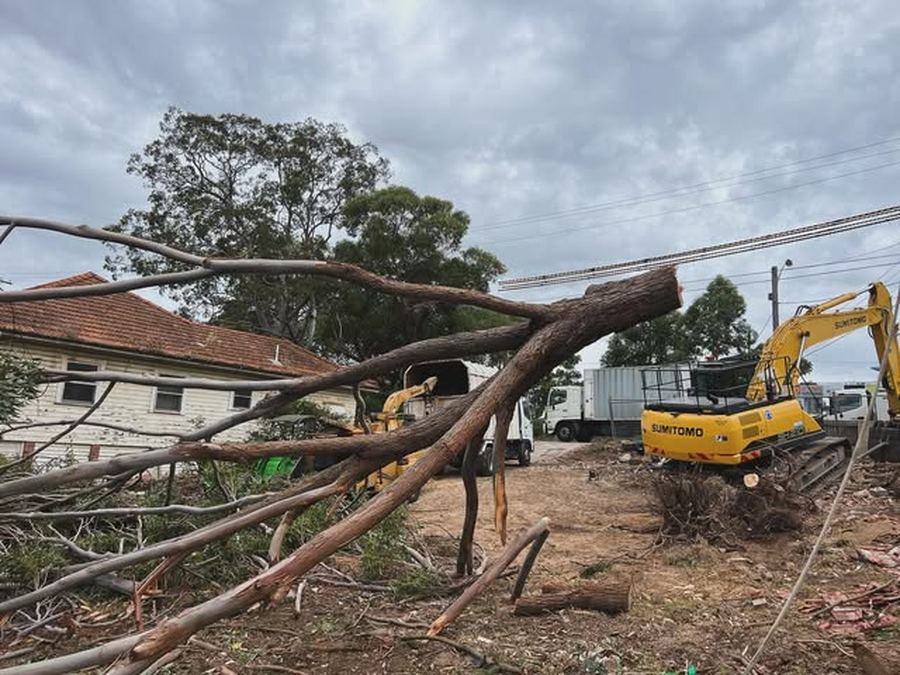
Where a block meets the bush, trees closest to your house matter most when fire season comes round. We take whole trees down on tight and sloping mountains blocks, in pieces over a roof, by crane from behind a house or in one fall where there’s room, then chip and clear.
 Your trees are looked after by Arbor Corp Tree Services.
- 10 m from the walls
- Over the roof: take down
- Up the back: take down
Which trees, and how close to the house?
The 10 m line matters twice. It changes how we work around your walls, and RFS 10/50 clearing is measured from it.
Before you send photos
- Your town, and where your tree stands
- How close it is to your house, and how tall beside your roofline
- How we get in, by drive, side gate, stairs or bush track
- Any council approval, exemption or 10/50 tool result you have
- A few phone photos of each tree and what sits under it
When a tree should come down
Any one of these is a good reason to have a tree looked at.
- A gum leaning toward your house, or dropping limbs on your roof and car
- A dead stag standing near your house, a shed or a boundary fence
- Trees crowding the house on a bush-edge block before fire season
- A tree in the way of a new deck, shed or extension
- A storm-split trunk or a limb left hanging after a blow
Tell us which it is and send photos. Where council has to approve it, and since October 2026 that includes a protected dead or dying tree, a permit comes first; inside 10 m on a 10/50 lot, we can book your job straight away.
Sloping yards and the bush edge
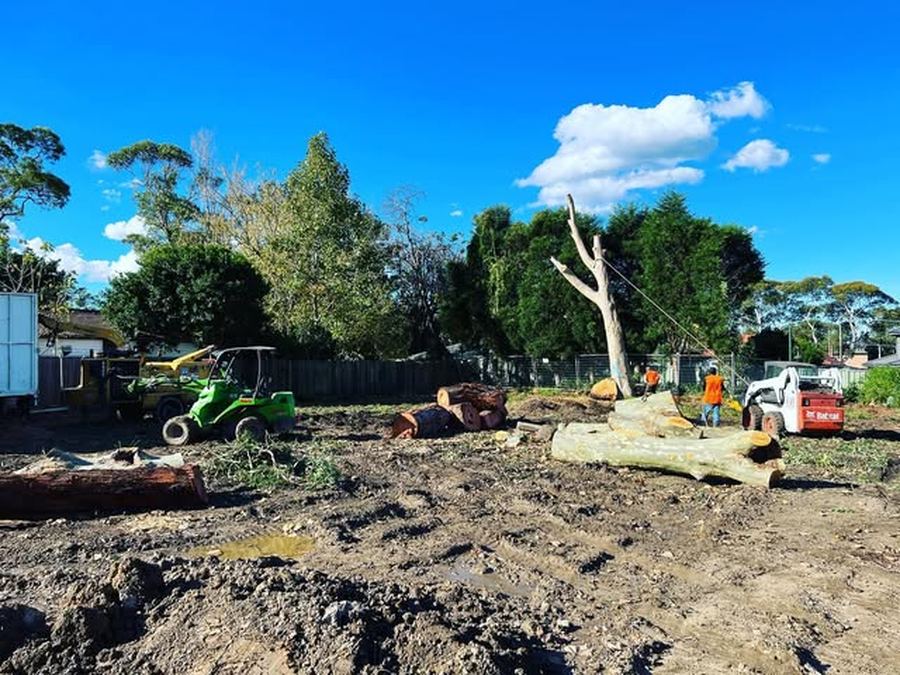
Plenty of lower-mountains blocks drop away behind a house toward a gully, with national park or a reserve past your back fence. We never roll anything down a slope or drop it into the bush. Your tree comes down into your yard, and every length is carried back up to your street.
Where a side gate is your only way in, we cut rounds small enough to fit through it and feed branches to a chipper parked out front.
Clearing around your house before fire season
On a lot an RFS check puts in a 10/50 entitlement area, trees within 10 m of your house can come down without a council permit, and shrubs within 50 m can be cleared too. Run that check when you clear and keep its result, because it records why those trees came down.
Further out, or where it says no, a tree 4 m or taller needs a council permit first. Either way we work the same, taking each tree down in pieces, chipping branches, carrying logs out and leaving your ground cleared.
Taking a tree down over the house
A tree over your roof never comes down in one. A climber ties in above your house, takes small limbs first and lowers each heavy one on a rope to us on the ground. Its trunk then comes down in rounds short enough to land without a bounce.
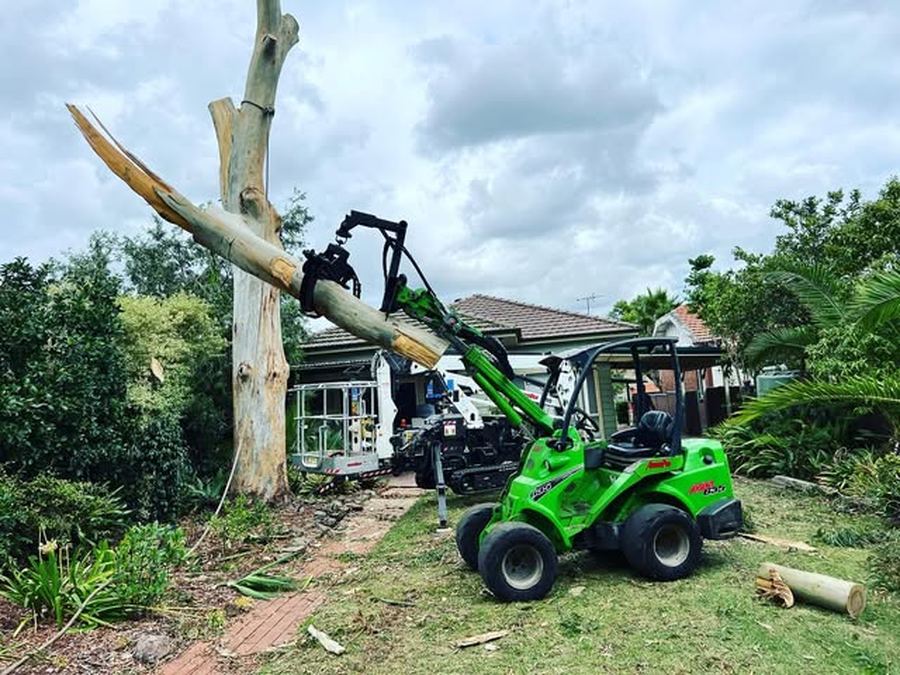
When a big gum stands behind a house with nowhere to lower it, we bring in a crane, set it up on your street and lift whole sections over your roof. Our loader’s grapple takes each piece from its hook to our chipper or truck.
Council’s 4 m rule and the 10/50 rule
Two rules decide whether a mountains tree needs a council permit before it comes down. Here they are in plain words, and we’re happy to go over them on the quote call.
Blue Mountains City Council
- A permit for most treesAny tree 4 m or taller, or with a crown spreading more than 4 m, needs a council permit before it is pruned or removed.
- Mallee gums at any sizeMulti-stemmed mallee eucalypts need a permit whatever their height.
- No permit neededBranches directly over a house or garage roof, cut back to a junction with the tree owner’s OK, dead branches on a living tree, storm-broken branches, and listed weed trees under their height limit.
- Heritage areasTrees in a heritage conservation area, or on a heritage-listed property, go to council first at any size.
- Dead, dying or dangerousSince October 2026 a protected dead or dying tree needs council’s permit, and a dangerous tree can come down without one only if council agrees the risk is imminent. Photograph it before any work.
- The permitLodged online through the NSW Planning Portal. One hundred and ninety-three dollars covers your first three trees, then twenty-five dollars a tree; council inspects, and a permit lasts 12 months.
The RFS 10/50 rule
On land NSW’s Rural Fire Service maps as a 10/50 entitlement area, you can clear trees within 10 m of your home’s outside walls, and shrubs within 50 m, without council approval.
Check your address with the RFS online tool when you clear, and keep its result. Heritage areas, endangered forest and creek banks are left out, and on a slope steeper than 18 degrees no tree is cleared without a geotechnical engineer’s report.
Already have a council approval, an exemption or a 10/50 result? Choose it on our quote form and add your paperwork to your photos.
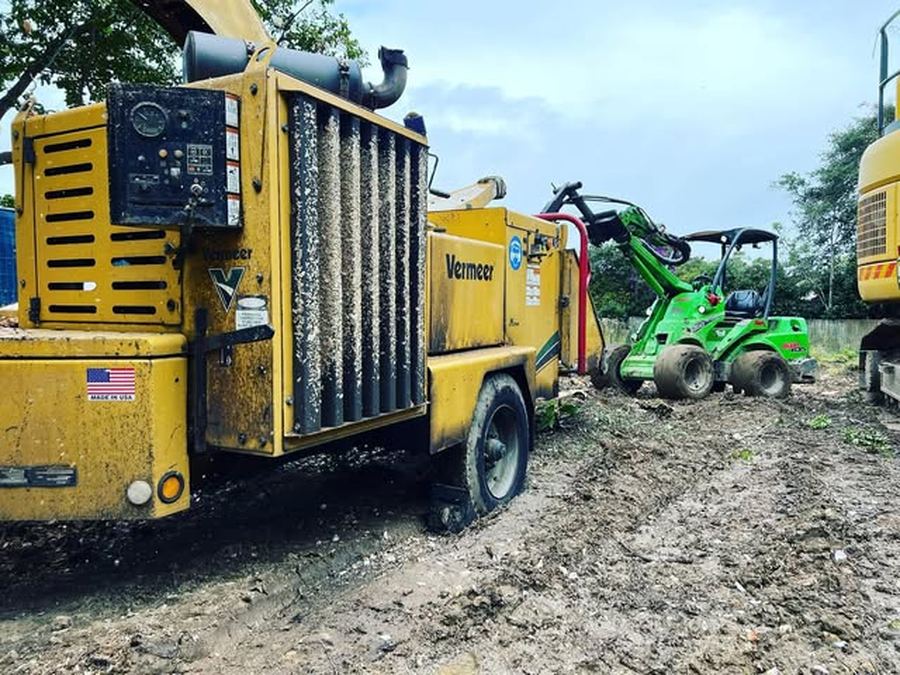
Inside the line or beyond it, we take each tree down in pieces and chip it on site.
Get my free removal quoteWhat goes into a removal quote
Height and spread come first, along with how much crown hangs over your roof. Then your block, from any slope behind your house to how far each length is carried back up to your street.
A drive our loader can use is quicker than a side gate and steps, and a crane adds to a job where one is needed. Tell us whether you want a stump ground out or left for later.
Send photos and the quote is free.
Removal questions
Something we haven’t covered? Ring 0480 024 748, or add it to your message on our form and we’ll answer it when we call.
Can you remove a gum that leans over the house?
Yes. We climb it and take it apart from the top, lowering each limb on a rope so nothing falls onto your roof. If it is too big to lower, a crane lifts sections over your house to the street.
Do I need a permit to remove a tree near my house in the Blue Mountains?
Council has no general exemption for trees close to a house, so a tree 4 m or taller needs a permit. On a lot an RFS check puts in a 10/50 area when you clear, trees within 10 m of your outside walls can be removed without one.
Can a dead tree come down without council approval?
Since October 2026, protected dead and dying trees need council’s OK too, and a risk exemption applies only when council agrees the danger is imminent. Photograph your tree before anything is cut.
How do you get the wood out of a steep yard?
We cut it into lengths that can be carried, and our loader brings them up to your street. Where it can’t reach, rounds come up by hand.
Will you grind the stump as well?
If you want it gone, yes. Tick stump grinding on our form and it becomes part of one quote.
Your free removal quote
Arbor Corp Tree Services does every job. Tell us about your trees, add a photo or two, and we’ll call you back to talk it through.
Once it arrives, we call you about your trees and your free quote. On the job we take them down or cut them back, chip every branch and leave your block cleared.
What helps us quote
- Your town, and where your tree stands
- How close it is to your house, and how tall beside your roofline
- How we get in, by drive, side gate, stairs or bush track
- Any council approval, exemption or 10/50 tool result you have
- A few phone photos of each tree and what sits under it
Thank you, your trees are with us.
We’ll call you back about the job and your free quote. Rather talk now? Call 0480 024 748.